

 Butterfly is the most powerful and impressive swimming stroke. It looks difficult, but it’s all about rhythm and using your whole body. This guide breaks down the butterfly into 5 simple, key points. We’ll show you how to swim a strong and graceful butterfly, step by step.
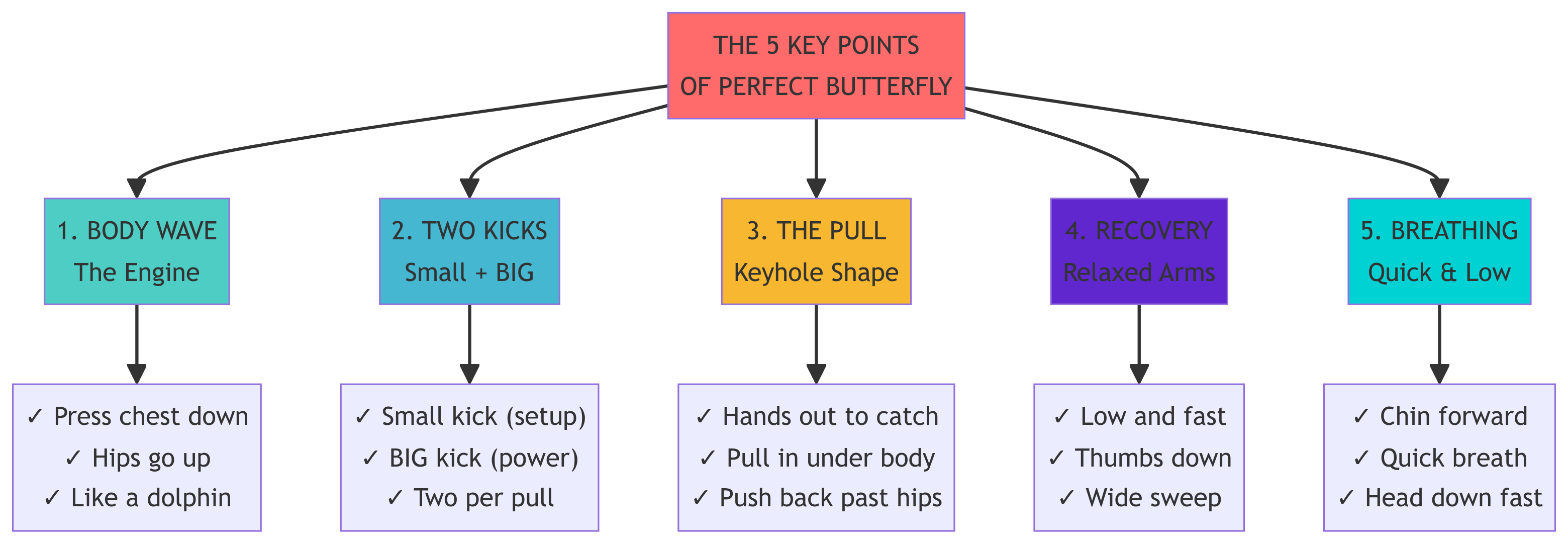
𝑻𝒉𝒆 5 𝑲𝒆𝒚 𝑷𝒐𝒊𝒏𝒕𝒔 𝒐𝒇 𝑷𝒆𝒓𝒇𝒆𝒄𝒕 𝑩𝒖𝒕𝒕𝒆𝒓𝒇𝒍𝒚
1. 𝙏𝙝𝙚 𝘽𝙤𝙙𝙮 𝙒𝙖𝙫𝙚: The Engine of Butterfly
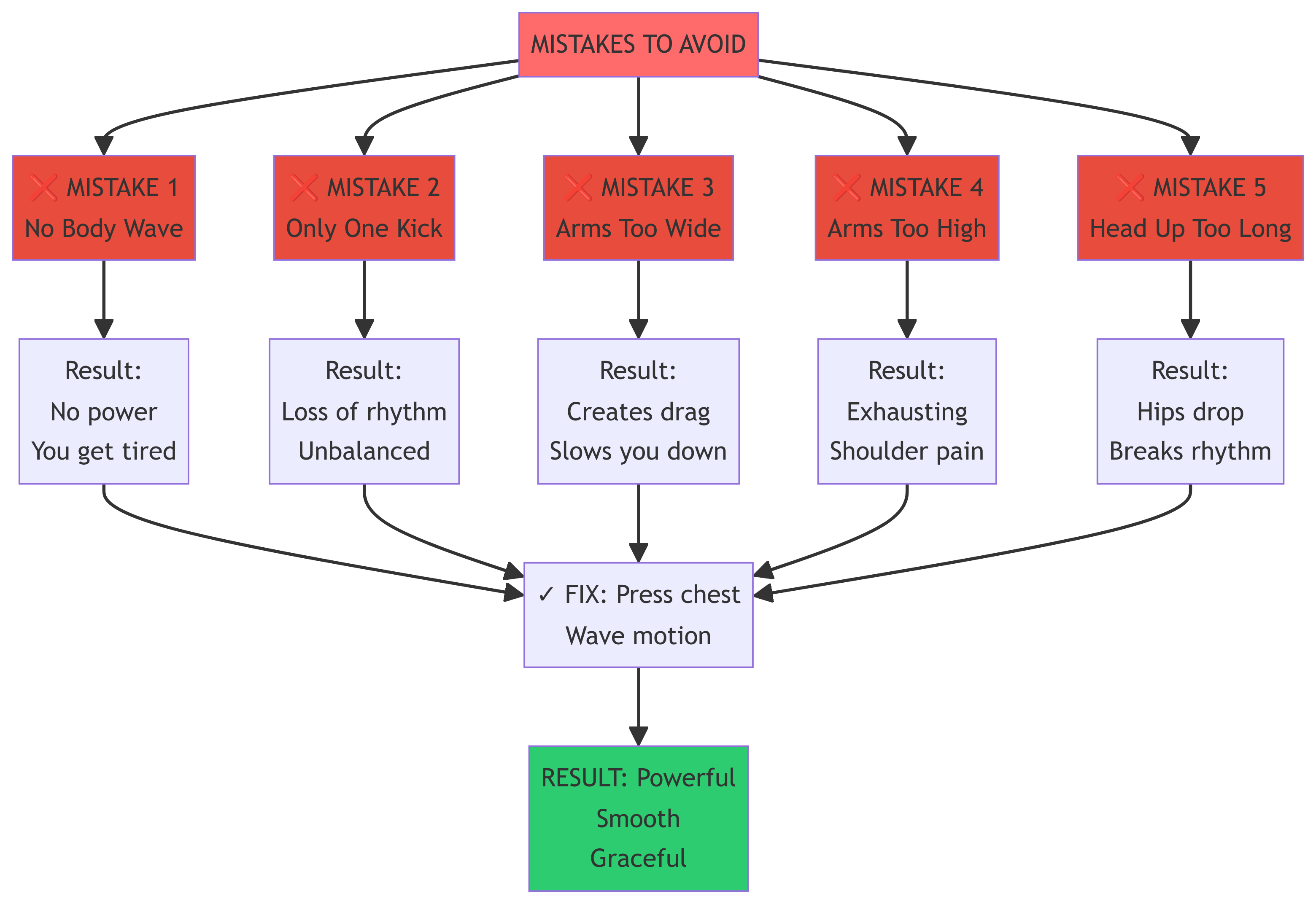
𝗧𝗵𝗲 𝗣𝗿𝗼𝗯𝗹𝗲𝗺: Trying to muscle through the stroke with only your arms and legs. This is exhausting and inefficient.
𝗧𝗵𝗲 𝗦𝗼𝗹𝘂𝘁𝗶𝗼𝗻: The power comes from a continuous, wave-like motion that starts at your chest and flows all the way to your feet. This is the dolphin kick body movement.
𝙋𝙧𝙚𝙨𝙨 𝙖𝙣𝙙 𝙍𝙚𝙡𝙚𝙖𝙨𝙚: Press your chest down into the water, which makes your hips go up. Then, release your chest and let your hips press down. This creates the wave.
𝖎𝖒𝖆𝖌𝖎𝖓𝖊: You are a dolphin or a mermaid propelling yourself through the water.
2. 𝑻𝒉𝒆 𝑻𝒘𝒐 𝑲𝒊𝒄𝒌𝒔: One Small, One Big
𝗧𝗵𝗲 𝗣𝗿𝗼𝗯𝗹𝗲𝗺: Kicking only once per arm stroke, or kicking at the wrong time. This breaks your rhythm.
𝗧𝗵𝗲 𝗦𝗼𝗹𝘂𝘁𝗶𝗼𝗻: There are two dolphin kicks for every one arm pull. They are not equal!
𝙁𝙞𝙧𝙨𝙩 𝙆𝙞𝙘𝙠 (𝙎𝙢𝙖𝙡𝙡): A small, stabilizing kick as your hands enter the water. This helps you set up your pull.
𝙎𝙚𝙘𝙤𝙣𝙙 𝙆𝙞𝙘𝙠 (𝘽𝙄𝙂): A powerful, propulsive kick as your hands are pushing back under your body. This is the kick that drives you forward.
3. 𝑻𝒉𝒆 𝑷𝒖𝒍𝒍: A Powerful Keyhole Shape
𝗧𝗵𝗲 𝗣𝗿𝗼𝗯𝗹𝗲𝗺: Pulling straight back with your arms. This doesn’t catch enough water.
𝗧𝗵𝗲 𝗦𝗼𝗹𝘂𝘁𝗶𝗼𝗻: The arm pull follows a “keyhole” shape. Both arms move together symmetrically.
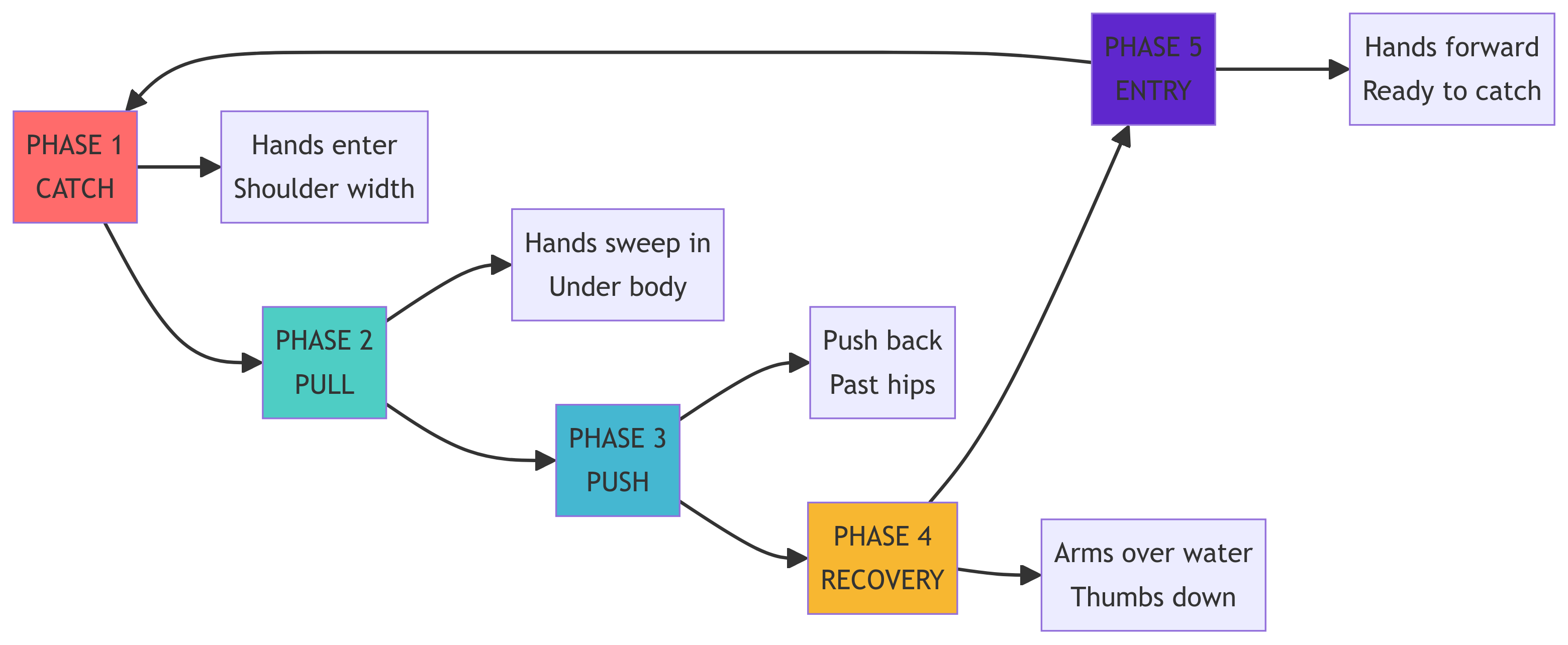
𝘾𝙖𝙩𝙘𝙝 (𝙊𝙪𝙩): Your hands enter the water about shoulder-width apart and sweep outwards slightly to catch the water.
𝙋𝙪𝙡𝙡 (𝙄𝙣): Your hands then pull inwards under your body, towards your belly button.
𝙋𝙪𝙨𝙝 (𝘽𝙖𝙘𝙠): Finally, you push the water back past your hips. This is the most powerful part of the pull.
4. 𝑻𝒉𝒆 𝑹𝒆𝒄𝒐𝒗𝒆𝒓𝒚: Relaxed Arms, Thumbs Down
𝗧𝗵𝗲 𝗣𝗿𝗼𝗯𝗹𝗲𝗺: Using too much energy to lift your arms out of the water, or having them bent and sloppy.
𝗧𝗵𝗲 𝗦𝗼𝗹𝘂𝘁𝗶𝗼𝗻: The recovery should be a relaxed, sweeping motion over the surface of the water.
𝑳𝒐𝒘 𝒂𝒏𝒅 𝑭𝒂𝒔𝒕: Keep your arms low to the water, almost skimming the surface.
𝙏𝙝𝙪𝙢𝙗𝙨 𝘿𝙤𝙬𝙣: As your arms exit the water, your thumbs should be pointing down. This helps relax the shoulders.
𝙒𝙞𝙙𝙚 𝙎𝙬𝙚𝙚𝙥: Your arms sweep out to the sides and then forward to enter the water again.
5. 𝑻𝒉𝒆 𝑩𝒓𝒆𝒂𝒕𝒉𝒊𝒏𝒈: Quick and Low
𝗧𝗵𝗲 𝗣𝗿𝗼𝗯𝗹𝗲𝗺: Lifting your head too high or for too long. This causes your hips to drop and kills your momentum.
𝗧𝗵𝗲 𝗦𝗼𝗹𝘂𝘁𝗶𝗼𝗻: Breathing should be quick, low, and timed perfectly with your body wave.
𝘽𝙧𝙚𝙖𝙩𝙝𝙚 𝙁𝙤𝙧𝙬𝙖𝙧𝙙: As your hands finish their push and start to exit the water, your body will naturally lift. This is when you lift your chin forward (not up) to take a quick breath.
𝙃𝙚𝙖𝙙 𝘿𝙤𝙬𝙣 𝙀𝙖𝙧𝙡𝙮: Your head should be back in the water before your hands re-enter.
𝙩𝙞𝙢𝙞𝙣𝙜: Breathe every other stroke to maintain rhythm. Advanced swimmers may breathe less often.
www.swimmingbangkok.com
#ButterflyStroke #Swimming #DolphinKick #FlyStroke #SwimTechnique #SwimCoach #SwimmingTips #SwimTraining #PoolWorkout #SwimLife #ButterflyTechnique #SwimmingForm #SwimFaster #PowerfulStroke #SwimRhythm #BodyWave #CompetitiveSwimming #SwimDrills #ButterflyPull #FlyDay #SwimmingFitness #PoolDay #SwimForFun #Cardio #FullBodyWorkout #WaterWorkout #FitnessJourney #SwimLove #LoveToSwim #JustKeepSwimming #EliteSwimmer #SwimmingChampion #TrainHard #AthleteLife #DolphinKickDrill #SwimmerCommunity #MotivationMonday #CoachTips #ProTips

No comments:
Post a Comment